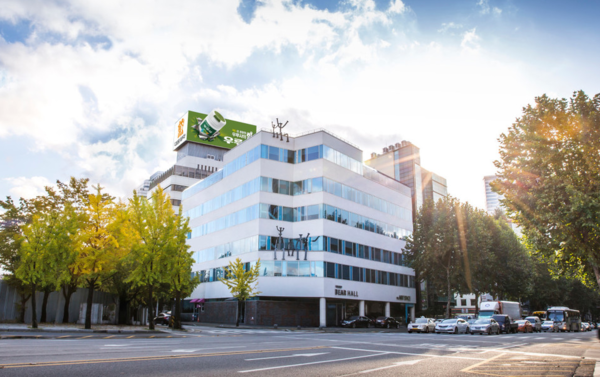
Daewoong Pharmaceutical is expected to report weak Q2 earnings due to one-time costs from distribution channel optimization, raising concerns about its medium- to long-term growth trajectory compared to competitors. For overseas buyers in medical aesthetics, the company's Botulinum toxin product Nabota faces ongoing legal risks, while its main drug Fexuclu is losing market share to rivals, signaling potential supply-chain disruptions for importers and distributors.
Q2 earnings forecast and distribution costs
According to financial data provider FnGuide, Daewoong's consolidated Q2 operating profit is forecast at KRW 49.3 billion, down 14.9% year-on-year. Revenue is expected to rise 2.4% to KRW 415.1 billion, but net profit may fall 18% to KRW 32.9 billion. On a standalone basis, operating profit is projected at KRW 51.2 billion, down 18.1%, and net profit at KRW 37.4 billion, down 23.5%.
The profit decline is attributed to the government's phased drug price reduction policy, which prompted Daewoong to restructure its prescription drug (ETC) distribution channels. One-time costs from returns, fee settlements, and inventory adjustments have squeezed profitability.
Competitive pressure on key products
Daewoong's flagship gastroesophageal reflux disease drug Fexuclu faces intensifying competition. In April-May, Dong-A ST's Jakyubo surpassed Fexuclu in outpatient prescription sales to claim the No. 2 spot, overtaking the previous order of K-Cab, Fexuclu, and Jakyubo. Industry sources attribute this to Dong-A ST's joint sales strategy with Jeil Pharmaceutical.
Legal uncertainty for Nabota
A lawsuit filed by Medytox in 2017 alleges that Daewoong's Botulinum toxin product Nabota used stolen bacterial strains. The first-instance ruling partially favored Medytox, and the Seoul High Court is expected to deliver a final verdict within the year. If the strain misappropriation is confirmed, it could lead to damages and potentially affect Nabota's domestic sales, posing a risk for overseas buyers relying on this product.
Regulatory impact on revenue
Several Daewoong products are affected by the government's phased drug price cuts. Key items include generic/licensed product Crejet (annual sales over KRW 30 billion, 2.6% of total revenue), patent-expired originals Olmetec (KRW 30 billion+, 2.3%), and Gasmotin (KRW 20 billion+, 1.6%). These price reductions may further pressure margins.
Competitors' growth strategies
Hanmi Pharmaceutical has expanded product sales and secured a KRW 1.8 trillion technology export deal, while Chong Kun Dang is strengthening its metabolic disease portfolio through co-marketing of Wegovy and Eylea, and investing KRW 400 billion in a bio-pharmaceutical production facility in Siheung. These moves highlight Daewoong's relatively slower growth trajectory.
What buyers should watch
Importers and distributors of medical aesthetics products should monitor the Nabota lawsuit outcome, as it could disrupt supply. The competitive shift in the PPI market may also affect pricing and availability of alternative gastroesophageal treatments. Daewoong's distribution restructuring may lead to temporary inventory adjustments, so buyers should verify stock levels and lead times with suppliers.
Source: Read the original report | Published: June 17, 2026