South Korea's K-beauty export boom is fueling a parallel surge in overseas dumping of excess inventory, with one major disposal firm reporting a threefold year-on-year increase in dumped volumes. The trend signals growing supply-chain inefficiencies for overseas buyers sourcing from Korean OEM/ODM manufacturers.
Dumping volumes triple
Dummy Dummy, a South Korean inventory disposal specialist, reported that its K-beauty export volume for last month reached 3 tonnes, triple the figure from the same period last year. The company sources excess stock from home shopping channels and online malls. CEO Kim Jong-myung said: "Domestic channels like group-buying and closed malls are too small to clear the stock. We sell cosmetic inventory to overseas customers at dumping prices — without them, we cannot move the goods."

Low entry barriers fuel overproduction
Industry analysts point to South Korea's low barriers for beauty start-ups as a root cause. Professor Kim Ju-deok of Seoul Cyber University's Beauty Industry Department noted: "Many jump in attracted by the glamour, but many fail. Recently, even people with zero knowledge of the beauty industry commission OEM firms to launch cosmetics quickly. This easy entry has saturated the domestic market." One former start-up founder, who launched a basic line of moisturizer, serum and lipstick via an ODM manufacturer, told the press: "I started with a vague hope of building my own brand, but the market was flooded with similar products at similar price points. Without a clear target audience or differentiation, survival was impossible."
Retail closures accelerate

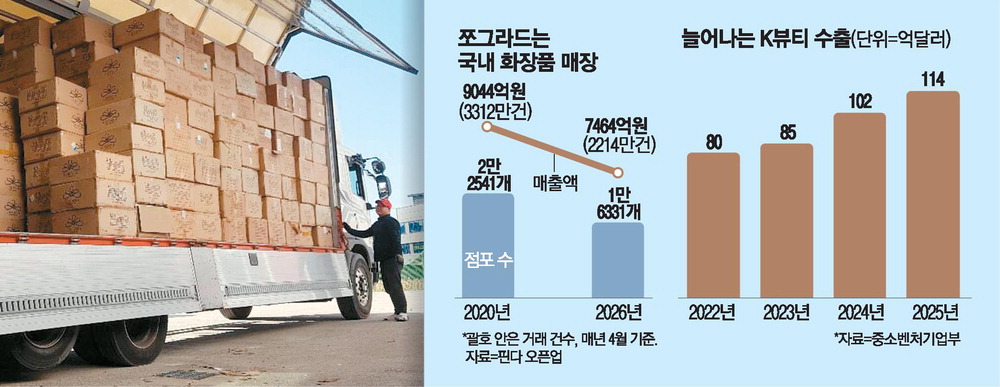
According to OpenUp, a commercial district analysis service by fintech firm Finda, the number of cosmetic retail stores in South Korea fell to 16,331 in April 2026, down 28% from 22,541 in April 2020. Over the same period, total sales dropped 17% to KRW 746.4 billion, and transaction volumes plunged 33% to 22.14 million. Professor Kim Young-ju of Eulji University's Cosmetic Science Department explained: "Brands that fail to secure shelf space at major platforms like Olive Young struggle with consumer visibility. Offline stores increasingly serve only as experience spaces, while actual purchases shift online, making physical retail unsustainable."
What buyers should watch
For overseas importers and distributors, the rising dumping volumes signal potential quality inconsistency and brand dilution risks when sourcing from Korean OEM/ODM partners. Professor Kim Young-ju recommended: "To reduce inventory burdens for small and mid-sized cosmetic firms, digital transformation — including AI-based demand forecasting, smart supply chain management, and small-batch production systems — is critical."

She added: "Government support should shift from simply expanding exports to strengthening R&D and global branding for companies with proprietary technology and brand competitiveness."
Export context
Despite the domestic challenges, K-beauty exports continue to grow. First-quarter 2026 exports reached USD 3.13 billion, up 21.5% year-on-year. Annual exports rose from USD 9.18 billion in 2021 to a record USD 11.43 billion in 2025, according to the Ministry of SMEs and Startups.
Source: Read the original report | Published: June 02, 2026