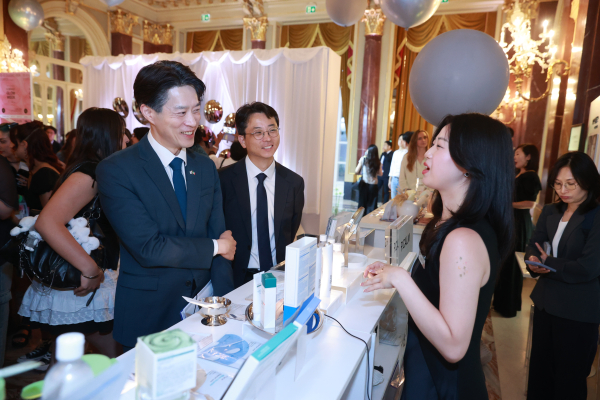
South Korea's cosmetic industry has achieved a historic milestone, with exports reaching $11.4 billion last year, making it the world's second-largest cosmetic exporter. This growth is increasingly driven by small and medium-sized enterprises (SMEs) and expanding beyond traditional markets like China into Europe, the Middle East, and Latin America. For overseas buyers and distributors, this signals a diversifying supply base and new sourcing opportunities for high-quality, trend-driven beauty products.
Record export performance
According to the Ministry of Food and Drug Safety and the Ministry of SMEs and Startups, South Korea's cosmetic exports hit $11.4 billion in 2024, an all-time high. The trade surplus for cosmetics surpassed $10 billion for the first time. Export destinations have expanded to over 200 countries, reducing reliance on any single market.
SME-driven growth
SMEs are the backbone of this export surge. Cosmetic exports by SMEs reached $8.3 billion last year, up 21.5% year-on-year, ranking second only to automobiles among SME export categories. In the first five months of this year, SME cosmetic exports grew 28.6% compared to the same period in 2024, far outpacing overall SME export growth.
Market diversification
While China was once the dominant market, K-beauty is now rapidly penetrating new regions. From January to May this year, cosmetic exports to the EU surged 61.1%, and to Latin America by 153.5%. Notable growth was seen in the UK, Netherlands, Poland, and Brazil, indicating a broadening export base less vulnerable to single-market fluctuations.
K-brand halo effect
Industry observers note that K-beauty has evolved beyond cosmetics into a gateway for Korean consumer goods. The "K-brand effect" means that as global consumers embrace Korean cosmetics, their interest in K-food, fashion, and lifestyle products also rises. This is fueled by K-pop, dramas, and social media content, which build brand recognition faster than traditional marketing.
What buyers should watch
For importers and distributors, the shift toward Europe, Latin America, and the Middle East opens new channels for sourcing innovative, on-trend products. The government is actively establishing K-beauty export hubs abroad, offering buyer matching, trade consultations, and promotional spaces. Additionally, the growing halal cosmetics market in the Middle East and Southeast Asia presents a promising niche. As Kim Jeong-dong, CEO of Allsale Corporation, noted, "The key for brands will be choosing which country as a core market and which distribution strategy to adopt."
Source: Read the original report | Published: June 16, 2026