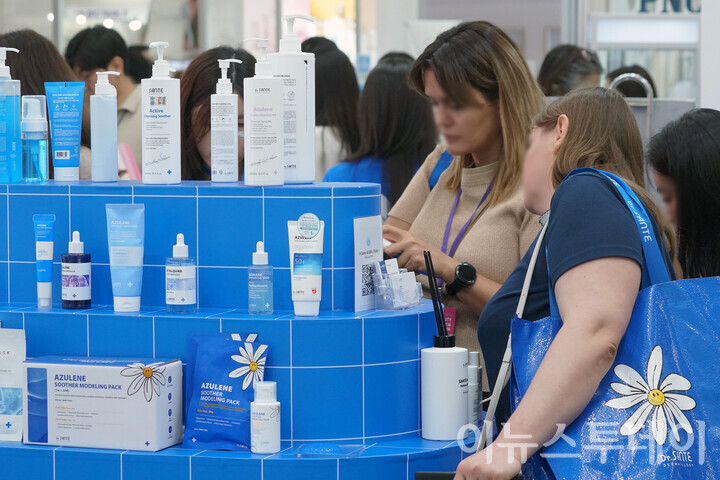
South Korea's cross-border e-commerce exports hit a record $224.58 million in April 2025, up 77% year-on-year, driven by K-beauty and K-fashion brands expanding overseas without first building domestic recognition. This reverse direct purchase trend signals a structural shift in global beauty distribution, offering overseas buyers direct access to emerging indie brands and innovative products.
Market signal
According to the National Logistics Information Center, cumulative e-commerce exports from January to April 2025 reached $660.35 million, a 53% increase from the same period last year. Export transactions also grew 20.6% to 2.07 million cases. The won's depreciation has lowered purchase costs for foreign consumers, while advanced platforms and logistics infrastructure now directly connect global buyers with Korean brands.
Brand spotlight: Skin1004
Skin1004 exemplifies this trend, growing revenue from 7.7 billion won in 2020 to 580 billion won in 2024—a 70-fold increase in five years. The brand focused on Southeast Asian markets early, leveraging localized distribution and marketing strategies. This success shows how smaller brands can bypass the domestic market and achieve global scale.
Indie brand momentum
Smaller beauty brands are also gaining traction. Newselect's brands 'Sharde' and 'Iom' ranked first and second in Qoo10 Japan's 'Mega Debut Awards'. Iom plans to expand exports to 10 countries including the US, Japan, China, and Singapore. This shift from large conglomerates to indie brands is reshaping the K-beauty export landscape.
What buyers should watch
Industry experts warn that sustained growth requires moving beyond currency-driven price advantages. High exchange rates can also raise raw material, logistics, and advertising costs. Product quality and brand identity are critical for repeat purchases. Professor Seo Yong-gu of Sookmyung Women's University notes, "The current reverse direct purchase growth is just the beginning of a full-scale expansion phase, driven by Hallyu preference abroad and domestic market stagnation."
Sourcing context
Platforms like Musinsa are now helping domestic designer brands enter China via Tmall Global, allowing overseas buyers to test new collections without local legal entities or offline stores. This lowers entry barriers for distributors and clinics seeking unique, trend-driven beauty and fashion products directly from Korean manufacturers.
Source: Read the original report | Published: June 15, 2026