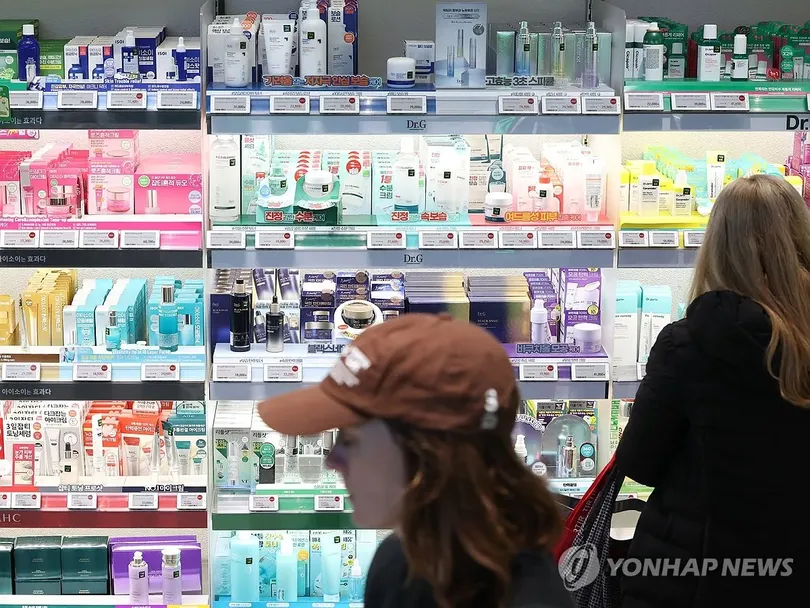
K-Beauty is entering a new phase of global expansion, driven not by legacy conglomerates but by agile independent brands, a world-class ODM manufacturing ecosystem, and powerful social media influence. For overseas buyers and distributors, this signals a structural shift in sourcing opportunities, with South Korea now challenging France for the top cosmetics exporter spot.
Export surge and market diversification
South Korea's cosmetics exports reached USD 5.6 billion in the first five months of 2026, up sharply from USD 4.6 billion in the same period of 2025, according to data from the Ministry of Trade, Industry and Energy. This follows a record-breaking 2025 when exports hit USD 11.4 billion, after surpassing USD 10 billion for the first time in 2024. South Korea is now the world's second-largest cosmetics exporter after France, and cosmetics have become the country's top export consumer good. At the current pace, analysts predict South Korea could rival France for the top spot within four to five years.
The ODM advantage: From formulation to finished product
Unlike traditional OEM models that only handle contract manufacturing, South Korea's advanced ODM (Original Design Manufacturer) ecosystem manages the entire product development process—from formulation research and design to final production. This allows brands to focus resources on marketing, brand building, and market expansion while leaving R&D and manufacturing to highly specialized partners. The combination of dynamic independent brands and sophisticated ODM capabilities creates a virtuous cycle: brands generate fresh ideas and respond quickly to market trends, while manufacturers rapidly turn those ideas into commercial products.

Independent brands lead the second wave
A defining feature of K-Beauty's second wave is the dominance of independent brands that bypass traditional department store and large retail channels. Instead, they leverage social media, influencers, and e-commerce platforms such as Amazon and TikTok Shop to reach consumers directly. This model enables rapid product testing, trend capture, and faster time-to-market compared to conventional businesses. Notable brands driving global expansion include APR, d'Alba, Beauty of Joseon, Anua, and SKIN1004.
Structural growth and sourcing context
Analysts describe the current phase as a structural growth period, fueled by the convergence of social media, Korean cultural content, ODM manufacturing capabilities, and direct-to-consumer platforms. The shift is not a short-term trend but reflects a fundamental transformation of the industry. For overseas importers and distributors, this means access to a pipeline of innovative, fast-moving products backed by a mature supply chain. The U.S. became South Korea's largest cosmetics export market in 2025, surpassing China for the first time with USD 2.2 billion in sales, while Europe is emerging as a new growth engine.
Source: Read the original report | Published: June 17, 2026