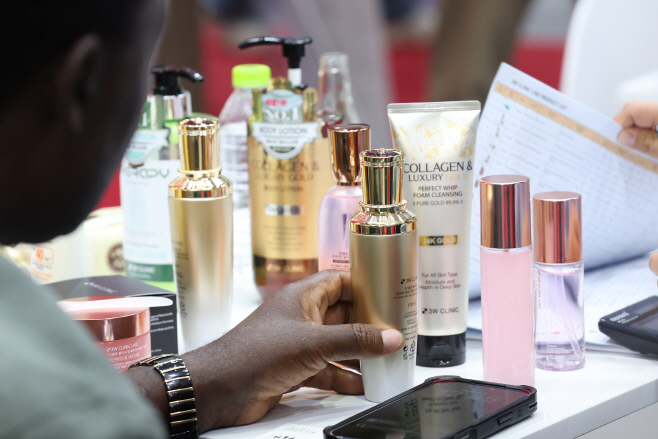
South Korea is accelerating the establishment of a science-based cosmetic safety assessment system to align with global standards, moving beyond its marketing-driven growth model. This development signals a major regulatory shift for overseas buyers and distributors sourcing K-beauty products, as new safety requirements will be phased in from 2028, impacting supply-chain compliance and product documentation.
Industry-Government Safety Council Launched
On June 5, 2026, the Ministry of Food and Drug Safety (MFDS) launched the 'Cosmetic Safety Assessment Public-Private Council,' bringing together major manufacturers, importers, and responsible sellers. The council includes key players such as Amorepacific, LG Household & Health Care, Cosmax, and Kolmar Korea, who will lead the development of safety assessment guidelines and standard templates for sharing ingredient composition and toxicity data.
Regulatory Gap and Global Standards
South Korea currently operates a negative list system, allowing most ingredients unless explicitly banned, with no mandatory pre-market safety report submission. In contrast, the EU has required Cosmetic Product Safety Reports and Product Information Files since 2013, the US enacted the Modernization of Cosmetics Regulation Act in 2022, and China is gradually expanding safety report requirements. The MFDS has acknowledged that Korea's post-market oversight model lags behind these international benchmarks.
Phased Implementation Timeline
The government has finalized a phased introduction of the cosmetic safety assessment system starting in 2028. Companies with annual production revenue exceeding KRW 1 billion (approximately USD 750,000) and new product categories will be the first to comply, with full expansion to all products by 2031. This timeline gives the industry time to adapt but requires immediate preparation for data sharing and technical support infrastructure.
What Buyers Should Watch
Overseas importers and distributors should monitor how Korean suppliers adapt to the new safety documentation requirements. The shift from a marketing-focused to a quality-focused model means that from 2028, products from larger Korean manufacturers will carry more rigorous safety dossiers, potentially simplifying international market access. Smaller suppliers may face compliance challenges, creating opportunities for buyers who partner with early-adopting manufacturers.
Sourcing Context
South Korea's cosmetic exports reached a record USD 11.4 billion in 2025, with a trade surplus of USD 10.1 billion, making it the world's second-largest exporter after France. The new safety framework is designed to sustain this growth by ensuring K-beauty products meet global regulatory expectations, reducing the risk of market access barriers in key destinations like the EU, US, and China.
Source: Read the original report | Published: June 05, 2026