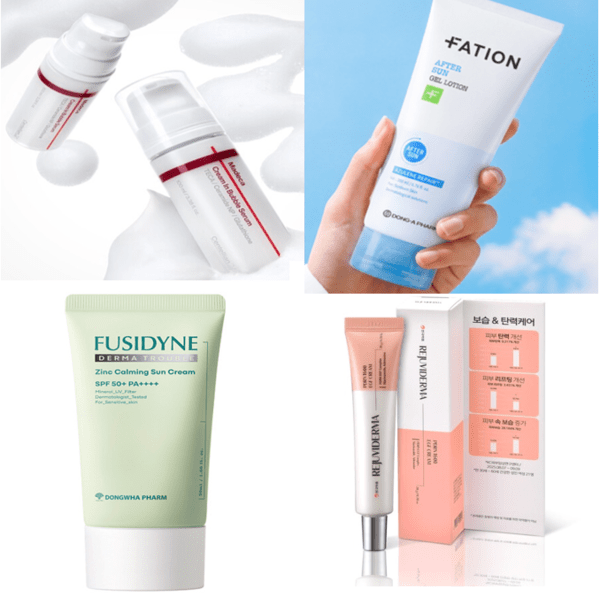
South Korean pharmaceutical companies are aggressively expanding into the cosmetics industry, with dermocosmetics emerging as a key growth driver. These firms leverage their R&D expertise and trusted brand equity to differentiate from conventional beauty brands, targeting both domestic and overseas markets through pharmacies, hospitals, online channels, and retail chains like Olive Young.
Market signal
Dermocosmetics—a blend of dermatology and cosmetics—focus on skin barrier improvement, soothing, pigmentation, and trouble care using scientifically backed functional ingredients. Korean pharma companies are now creating standalone brands that go beyond traditional pharmacy-only products, signaling a strategic shift toward broader consumer and B2B channels.
Key players and product strategies
Dongkook Pharmaceutical launched 'Centellian24' in 2015, featuring Centella asiatica extract—the same active ingredient in its wound-healing ointment Madecassol. Its cosmetics division generated approximately KRW 275.5 billion in 2025, accounting for 30.8% of total revenue.
Daewoong Pharmaceutical's 'Easydew' brand, built around its proprietary DW-EGF (high-activity epidermal growth factor), surpassed KRW 100 billion in cumulative sales. The brand targets pigmentation and skin regeneration with ampoules and cushions.
Dong-A Pharmaceutical's 'Partion' brand targets sensitive and troubled skin, leveraging its OTC brand recognition for scar and skin improvement. Dongwha Pharmaceutical's 'Husidan' line expands into soothing, barrier, and anti-aging segments, distributed through Olive Young and online malls.
Sourcing context
Kookje Pharmaceutical's 'Lapocell' exemplifies a pharmacy-based dermocosmetic model, initially entering hospitals and pharmacies to build trust before expanding. Ahnkook Pharmaceutical recently entered the PDRN skincare market with 'Rejuven Derma,' a plant-based PDRN product for regeneration, soothing, and whitening, targeting premium pharmacy channels.
What buyers should watch
Overseas importers and distributors should monitor these pharma-backed dermocosmetic brands for their strong R&D foundations, clinical credibility, and quality control systems. However, success in the cosmetics market requires not only efficacy but also sensory appeal, pricing, and packaging design. These factors will determine which brands can successfully scale beyond Korea into global B2B channels.
Source: Read the original report | Published: June 10, 2026