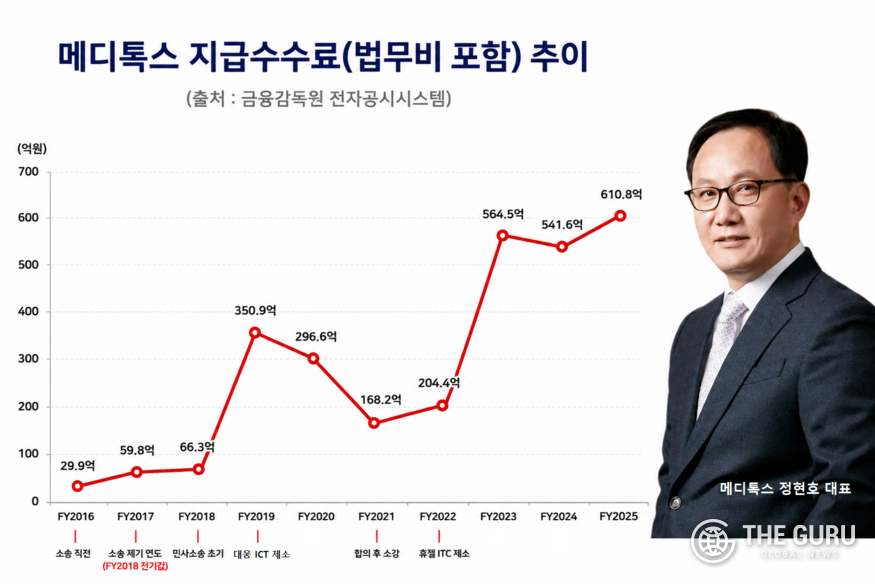
South Korean botulinum toxin manufacturer Medytox is facing mounting financial pressure as its nine-year legal battle with Daewoong Pharmaceutical and Hugel continues to escalate. The company has spent approximately KRW 280 billion (USD 210 million) in legal fees since 2018, severely impacting its operating profit and market valuation. For overseas buyers and distributors sourcing botulinum toxin products, this prolonged litigation signals potential supply chain instability and pricing risks from a key Korean supplier.
Legal cost burden
Medytox's annual legal and advisory fees reached KRW 61 billion in 2025, up 13% from the previous year, according to Korea's Financial Supervisory Service. Since 2018, cumulative fees have totaled KRW 280.3 billion, compared to an annual average of just KRW 2.2 billion before the lawsuits began. Market analysts estimate that up to 94% of these fees are litigation-related legal costs. Kiwoom Securities calculated that 83% of the KRW 30.9 billion in fees recorded in the first three quarters of 2025 were legal expenses.
Profitability under pressure
Medytox's operating profit has shrunk 63% over three years, from KRW 46.7 billion in 2022 to KRW 17.2 billion in 2025. In 2025, legal fees exceeded operating profit by 3.5 times. The company's operating margin of 6.9% lags far behind competitors Daewoong Pharmaceutical (12%) and Hugel (43.3%). In Q1 2026, Medytox spent KRW 17 billion on fees, more than double its operating profit of KRW 7.4 billion. Analysts note that without legal costs, Medytox's operating margin could have reached 35%.
Dual litigation fronts
Medytox is fighting two separate lawsuits. The case against Daewoong Pharmaceutical, filed in 2017, alleges strain and manufacturing process theft. In February 2023, the Seoul Central District Court ordered Daewoong to pay KRW 40 billion in damages, but Daewoong appealed. The Seoul High Court is now hearing the case, with a ruling expected by late 2026 or early 2027. Separately, Medytox filed an ITC complaint against Hugel in 2022, but withdrew key claims after discovery. The ITC ruled in Hugel's favor in October 2024, and Medytox appealed to the CAFC in December 2024.
What buyers should watch
Distributors and clinics sourcing botulinum toxin from Medytox should monitor the legal outcomes closely. A negative ruling could disrupt supply or force price adjustments. The company's financial strain may also affect R&D investment and product pipeline. Meanwhile, competitors Daewoong and Hugel are gaining market share with stronger margins and fewer legal distractions. Buyers may consider diversifying suppliers to mitigate risk.
Sourcing context
Medytox remains a major player in the global botulinum toxin market, but its legal overhang creates uncertainty. The company's stock has fallen below KRW 90,000, reflecting investor concern. Shareholders have expressed frustration, calling for management to focus on operations rather than litigation. For overseas importers, the situation underscores the importance of supplier due diligence, especially regarding intellectual property disputes that can impact product availability and pricing.
Source: Read the original report | Published: June 06, 2026