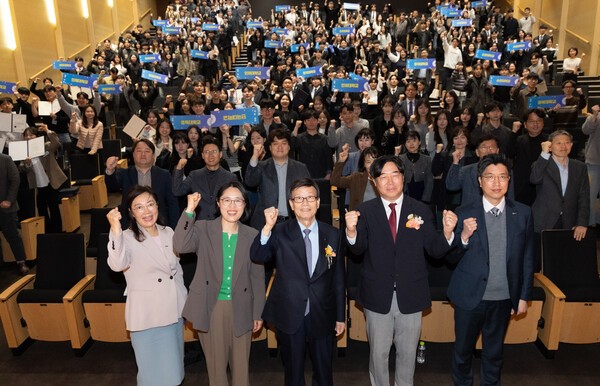
South Korea’s Korea International Trade Association (KITA) has launched a new phase of its GTEP program, selecting 100 promising K-consumer goods SMEs—nearly half of them in beauty and cosmetics—for intensive export support through December 2026. The initiative pairs university students trained in AI-driven digital marketing with small manufacturers, aiming to accelerate overseas sales amid a global K-beauty boom.
Program scope and structure
The GTEP (Globally Talented Expert for Promotion) program, jointly run by KITA and the Ministry of Trade, Industry and Energy since 2007, now involves 620 students across 20 university business units. Each unit will support five SMEs, providing hands-on export assistance including market research, trade show participation, AI-powered e-commerce marketing, content creation, and direct buyer communication. Over 19 years, the program has generated cumulative export value of USD 145.74 million.
AI and digital marketing focus
This year’s GTEP teams are moving beyond traditional overseas marketing to deploy advanced digital tools. Students will use AI-based global e-commerce marketing, generative engine optimization (GEO), and AI chatbots to help SMEs reach international buyers. A notable case is Jeonbuk National University’s team, which used Alibaba.com’s AI chatbot and GEO strategy to secure a supply contract worth approximately KRW 240 million (USD 180,000) with a Japanese company.
K-beauty dominance and regional distribution
Among the 100 selected SMEs, beauty and cosmetics companies account for 48 firms—the largest category. Processed and health food companies number 33, while household and kitchenware firms make up 19. Regionally, 48 companies are based in the Seoul metropolitan area and 52 in non-capital regions, ensuring balanced support across the country. These same firms generated USD 7.39 million in exports through GTEP collaboration last year alone.
What buyers should watch
For overseas importers and distributors, the GTEP program signals a pipeline of digitally native, export-ready K-beauty and consumer goods suppliers. The emphasis on AI marketing and cross-border e-commerce means these SMEs are likely to be more responsive to online B2B inquiries and faster at adapting to platform-specific requirements. Buyers seeking innovative, small-batch or niche K-beauty products should monitor GTEP-linked companies for potential partnership opportunities.
Regulatory and channel signals
The program’s integration of AI tools and live-commerce strategies—such as Chinese-language livestreaming and Shopee/Amazon marketplace management—reflects a broader shift in South Korea’s export support infrastructure. This suggests that K-beauty SMEs are increasingly equipped to handle direct-to-consumer and B2B2C models, reducing reliance on traditional distributors. However, buyers should verify each supplier’s regulatory compliance for their target markets, as small manufacturers may have limited experience with overseas certification processes.
Source: Read the original report | Published: June 14, 2026