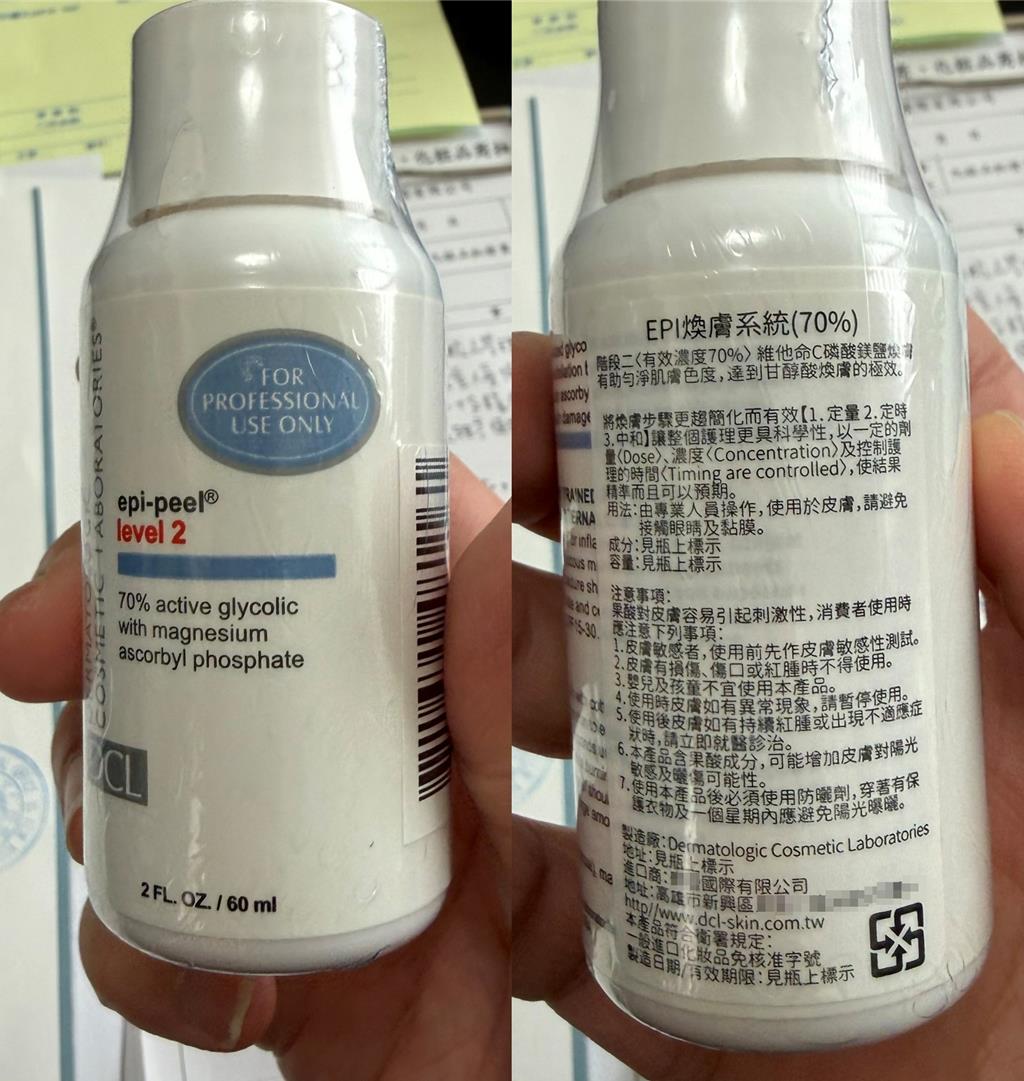
A young woman in Kaohsiung suffered severe facial burns during an AHA (alpha hydroxy acid) peel at a dermatology clinic in April, allegedly due to a beautician mistakenly using a 70% concentration instead of 40%. The subsequent investigation by the Kaohsiung City Health Bureau uncovered a distributor that had been illegally repackaging expired raw materials and selling them to medical aesthetics clinics and hospitals, generating illicit profits of over NT$26 million. This case highlights critical supply-chain risks for overseas buyers sourcing aesthetic products from Taiwan.
Investigation details
The health bureau traced the expired AHA products back to a Kaohsiung-based distributor that had previously represented a U.S. skincare brand. After ceasing imports from that brand in 2007, the company allegedly repackaged its long-expired inventory and raw materials into new bottles, printing false manufacturing and expiration dates before selling them to multiple hospitals and clinics.
Illegal manufacturing and labeling
During a raid on June 10, authorities seized chemical raw materials, empty bottles, label printers, and sealing equipment at the distributor's factory, office, and the owner's residence. The company is suspected of manufacturing products without authorization, including commissioning factories in Taiwan or Italy to produce identical items, then labeling them in English to mimic original imports.

Legal and regulatory actions
The distributor's owner, surnamed Yen, along with four others (including her children who held management roles), were summoned for questioning. Yen faces charges of aggravated fraud and violation of trade regulations. The court granted her bail at NT$800,000, while two others were released on NT$300,000 bail or under residential restrictions. The health bureau has ordered a product recall and will impose fines under the Cosmetics Hygiene and Safety Act, ranging from NT$20,000 to NT$5 million.
What buyers should watch
Overseas importers and clinic buyers should verify that their Taiwanese suppliers hold valid product authorization and manufacturing licenses. This case underscores the risk of expired or counterfeit AHA peels entering the supply chain. Always request batch traceability, check for original import documentation, and conduct independent lab testing on high-concentration acids to avoid liability for patient injuries.
Source: Read the original report | Published: June 12, 2026