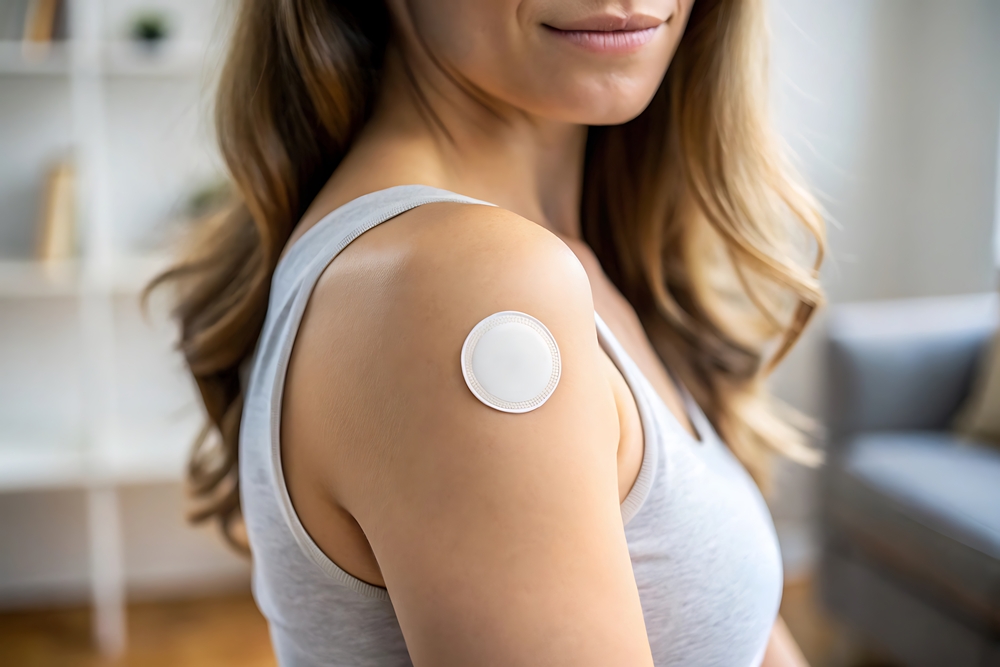
Impli has secured a £1.4 million grant to advance its BEAM (Bio-Endocrine Analysis Monitor) device from prototype to first-in-human clinical validation for IVF. The technology uses microneedles to continuously monitor hormones in interstitial fluid, offering real-time data that could replace intermittent blood tests. For medical aesthetics and fertility clinic buyers, this signals a shift toward wearable biosensor platforms with potential cross-application in hormone-related aesthetic treatments.
Technology overview
Impli’s BEAM device employs electrochemical biosensors embedded in microneedles to measure oestradiol, luteinising hormone, and progesterone in real time. Data is transmitted wirelessly to a smartphone, where AI software converts raw signals into hormone trends. The system is designed for subcutaneous implantation or microneedle-based skin penetration, enabling continuous monitoring without repeated blood draws.

Clinical relevance for IVF
Timing is critical in IVF, yet current monitoring relies on blood tests every other day. Hormone levels can shift within hours, potentially missing ovulation surges, implantation failure signals, or early signs of ovarian hyperstimulation syndrome. Impli’s continuous monitoring aims to provide a live feed of hormonal response, allowing clinicians to personalise care dynamically.
Consortium and funding

The £1.4 million grant supports a research consortium including Imperial College London, Wolfson Fertility Centre, and specialist medical device manufacturer TTP. Dr Sotirios Saravelos, consultant gynaecologist at Wolfson Fertility Centre, stated: "Continuous hormone monitoring has the potential to change the landscape of fertility treatment, both in terms of clinical care and patient experience." Impli’s head of AI, Dr Simon Hanassab, contributed to the project through a PhD on AI decision support for IVF.
Development status
Impli has delivered three functional prototypes, completed pre-clinical laboratory trials, and begun animal trials with positive results. The technology builds on over 15 years of biosensor research at Imperial, with intellectual property covering sensing approach, device architecture, and data interfaces. The next step is first-in-human clinical validation for IVF.

What buyers should watch
For distributors and clinics in medical aesthetics, Impli’s platform demonstrates the growing convergence of wearable biosensors and hormone monitoring. While initially targeting fertility, the microneedle-based continuous sensing approach could extend to aesthetic applications such as hormone-related skin conditions or anti-aging treatments. Buyers should monitor regulatory progress and clinical trial outcomes, as the technology may offer new patient monitoring solutions for clinics expanding into hormone-related aesthetic services.
Source: Read the original report | Published: June 18, 2026