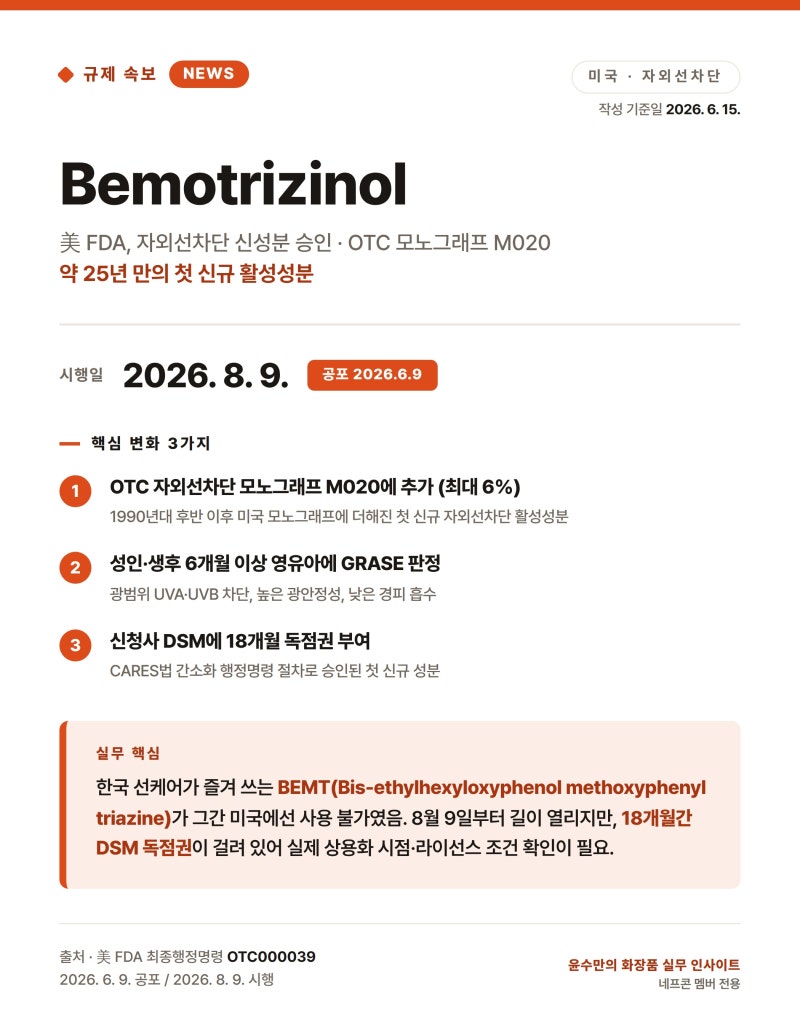
The US FDA has approved Bemotrizinol (BEMT) as a new active ingredient for sunscreens, marking the first addition to the OTC monograph since the late 1990s. Effective August 9, 2026, this broad-spectrum UVA/UVB filter offers high photostability and low skin penetration, already widely used in Europe and Korea. For Korean sunscreen manufacturers and brands exporting to the US, this opens a long-closed formulation door — but with a critical 18-month exclusivity period for applicant DSM.
Regulatory milestone
On June 9, 2026, the FDA issued a final administrative order (OTC000039) adding Bemotrizinol at up to 6% concentration to the OTC sunscreen monograph M020. The agency described it as the first new sunscreen option in two decades. The ingredient received GRASE (generally recognized as safe and effective) status for adults and infants aged 6 months and older, based on its broad UV protection, high stability, and minimal absorption through skin.
Impact on Korean sunscreen manufacturers
BEMT (bis-ethylhexyloxyphenol methoxyphenyl triazine, commonly known as Tinosorb S) has been a core broad-spectrum filter in Korean and European sunscreens for years, but was previously banned in US formulations. This forced Korean exporters to maintain separate formulations for the US market. The approval eliminates that barrier from August 9, 2026, allowing the same high-performance formulas to be used in US-bound products.
What buyers should watch
Despite the approval, immediate market access is not automatic. DSM, the applicant, holds 18 months of exclusivity starting from the effective date. This means other manufacturers cannot use Bemotrizinol in US sunscreens without a license from DSM until at least February 2027. Importers and distributors should verify licensing terms and commercialization timelines before reformulating or placing orders.
Sourcing context
Korean sunscreen OEMs and brands that already use BEMT in domestic or European products now have a clear regulatory path to the US market. However, the exclusivity period may delay broad adoption. Buyers should monitor DSM's licensing strategy and prepare for potential supply constraints during the exclusivity window. The approval signals a long-term shift in US sunscreen formulation standards, aligning more closely with global practices.
Source: Read the original report | Published: June 15, 2026