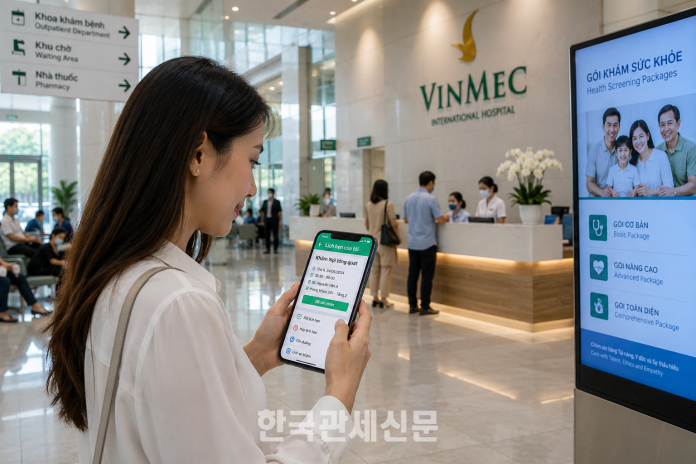
Vietnam's healthcare market is undergoing a structural shift: patients now search for hospitals on smartphones, compare check-up packages, read dermatology reviews, and order medicine via apps. The core issue is no longer a shortage of hospitals but a lack of trusted medical systems and management platforms. For Korean medical aesthetics and healthcare supply-chain players, this opens a clear window to export not just devices or products, but integrated operational systems.
Market signal: From hospital scarcity to trust scarcity
Vietnam's healthcare spending reached approximately $18.5 billion in 2022, about 4.6% of GDP. Yet public hospitals account for 86% of all facilities, and major hospitals in Hanoi and Ho Chi Minh City operate at up to 200% of designed capacity. Long wait times, brief doctor consultations, and poor aftercare are driving middle-class patients toward private and international hospitals — even at higher costs. The market is moving from price-driven to trust-driven consumption.
Medical tourism: $700 million to $4 billion by 2033

Vietnam's medical tourism market is projected to grow from about $700 million in 2024 to nearly $4 billion by 2033, a CAGR of roughly 18%. The Ministry of Health is promoting integrated models combining hospitals, hotels, resorts, and travel services in key regions such as Hanoi, Ho Chi Minh City, Da Nang, Quang Ninh, and Khanh Hoa. The goal is to have 15 internationally accredited hospitals by 2030. Success, however, depends not on facilities alone but on connected systems for appointment booking, interpretation, test results, aftercare, insurance processing, accommodation, and return-visit management.
What buyers should watch: Aesthetic clinics, dental, and check-up centers
Korean medical systems have the strongest entry points in dermatology, aesthetic medicine, dentistry, ophthalmology, rehabilitation, and women's/fertility clinics. In Ho Chi Minh City and Hanoi, clinics branding "Korean Standard," "K-beauty," and "Korean Dermatology" are proliferating. Vietnamese consumers are showing strong interest in laser, lifting, botox, filler, acne treatment, skin regeneration, and hair loss management — beyond just Korean cosmetics. The dental market is also promising, with implants, orthodontics, laminates, and whitening seeing real spending from the middle class. Health check-up centers, still underdeveloped, are poised for rapid growth driven by corporate wellness, overseas employment, and early cancer screening demand.

Sourcing context: Export systems, not just hospitals
Rather than building large general hospitals, Korean companies should focus on specialized centers and platform partnerships. The realistic strategy is threefold: first, prioritize specialized clinics (dermatology, dental, ophthalmology, check-up, pain management, fertility). Second, forge local partnerships with hospitals, pharmacies, insurers, and travel agencies — local licensing and networks are critical. Third, export management systems — appointment, consultation, diagnosis, interpretation, aftercare, insurance linkage, and return-visit management — rather than just doctors or devices. The competitive edge lies in the Korean-style trust system, not the hospital signboard.
Regulatory and channel signals: Digital health and platform shift

Vietnam's digital health market is estimated at about $398 million in 2024, with a projected CAGR of 11.45% through 2030. The government's national digital transformation program prioritizes healthcare. Platforms like Jio Health, eDoctor, Doctor Anywhere, Medlatec, and Long Chau are capturing patient journeys before and after hospital visits. The power is shifting from hospitals to platforms that manage data — appointment records, test results, medication history, insurance claims, and revisit cycles. Korean companies must adapt: building a hospital alone is insufficient; creating a structure that continuously manages patients is key.
What buyers should watch: The next 2-3 years
The market is still fluid — no single player has locked in trust standards. Key areas reshaping the market include premium health check-ups, dermatology and aesthetic medicine, dental implants, women's/fertility clinics, pharmacy chain platforms, online consultations, home testing, corporate wellness, insurance-linked services, medical tourism packages, AI-based health management, and chronic disease management apps. Korean firms can most realistically enter via specialized centers combined with digital aftercare platforms. Large hospital investments carry high time, cost, and licensing risks; specialized center-plus-platform models allow faster market testing. The winners will be those who manage the entire patient journey, not just those with the best doctors.
Source: Read the original report | Published: June 01, 2026